
Every year, thousands of preventable crashes claim lives and leave victims with lasting injuries. Many of these incidents share a single cause: driver negligence. When a driver fails to exercise reasonable care behind the wheel, the consequences can be devastating—not just for themselves, but for everyone sharing the road.
Driver negligence is a legal term that describes a failure to act with the level of care that a reasonably prudent person would exercise under similar circumstances. From glancing at a phone to running a red light, negligent behaviors are disturbingly common. Knowing what they are—and how they cause harm—matters, especially if you or someone you love has been injured as a result.
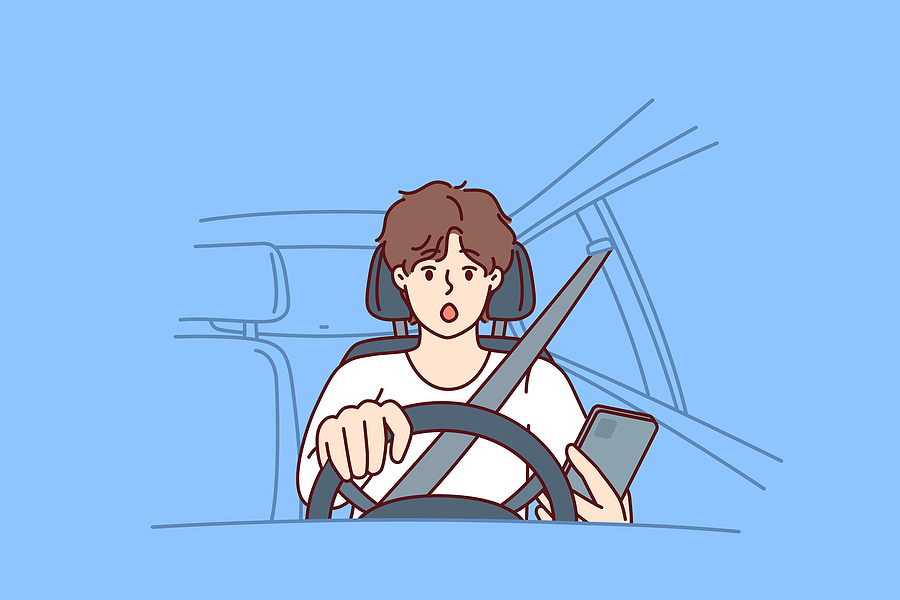
Common Forms of Driver Negligence
Distracted Driving: A Major Hazard
Distracted driving is one of the most pervasive and deadly forms of driver negligence on U.S. roads. According to the National Highway Traffic Safety Administration (NHTSA), distracted driving claimed 3,208 lives and injured an additional 315,167 people in 2024 alone.
The most dangerous distraction is texting. Reading or sending a text takes a driver’s eyes off the road for approximately five seconds. At 55 mph, that’s the equivalent of driving the entire length of a football field with your eyes closed. Other common distractions include eating, adjusting navigation systems, and talking to passengers—all of which significantly reduce a driver’s reaction time and situational awareness.
Impaired Driving: Alcohol and Drugs
Impaired driving remains one of the deadliest threats on American roads. In 2024, 11,904 people died in alcohol-impaired driving crashes, accounting for roughly 30% of all traffic fatalities in the U.S., according to NHTSA. That translates to one person killed every 44 minutes—a staggering, preventable toll.
Alcohol impairs judgment, slows reaction time, and reduces coordination. Drivers with a blood alcohol concentration (BAC) of .08 g/dL are four times more likely to crash than sober drivers. At a BAC of .15, that risk jumps to at least 12 times higher (NHTSA, 2024).
Drug-impaired driving follows a similar pattern of danger. Prescription medications, marijuana, and illicit drugs all affect a driver’s ability to process information and respond to hazards. Whether a driver is under the influence of alcohol or drugs, choosing to get behind the wheel in that state is a serious act of negligence with serious legal consequences.
Fatigued Driving: The Dangers of Drowsiness
Fatigued driving is often called the “invisible” threat—it leaves no physical trace after a crash, making it far harder to detect and report. A 2026 report from the Governors Highway Safety Association (GHSA) found that more than 6,300 people died in suspected drowsy driving crashes in 2023, a figure that’s 10 times higher than what is officially reported in federal statistics.
Nearly 20% of Americans admit to driving while drowsy at least once in the past month, according to the AAA Foundation for Traffic Safety. The National Safety Council reports that driving after going more than 20 hours without sleep is the equivalent of driving with a BAC of 0.08%—the legal limit in most states.
The economic cost is equally sobering. NHTSA estimates that fatigue-related crashes involving injury or death cost society $109 billion annually.
Speeding and Reckless Driving
Speed kills—and the data bears this out clearly. In 2023, speeding was a factor in 29% of all motor vehicle fatalities nationwide, resulting in 11,775 deaths, according to the National Highway Traffic Safety Administration.
Speeding reduces a driver’s ability to steer safely around curves, shortens the time available to react to sudden hazards, and extends braking distances. Combined with reckless behaviors like aggressive lane changes, tailgating, running red lights, or street racing, speeding dramatically increases the likelihood of a serious crash.
A particularly concerning pattern: in 2023, 38% of speeding drivers involved in fatal crashes had a BAC of .08% or above, highlighting how multiple forms of negligence often occur simultaneously.
Failure to Obey Traffic Laws
Traffic laws exist for one reason—to keep everyone on the road safe. When drivers ignore red lights, blow through stop signs, fail to yield the right of way, or make illegal turns, they put lives at risk. These are clear-cut examples of negligence, and they are responsible for a significant portion of intersection-related crashes each year.
Distracted or impaired drivers are especially prone to missing traffic signals and failing to follow basic road rules. But even fully sober, alert drivers sometimes make deliberate choices to disobey traffic laws—choices that can have fatal consequences.
Consequences of Driver Negligence
Legal Ramifications
Driver negligence carries significant legal weight. A negligent driver can face criminal charges, license suspension, heavy fines, and civil liability. In Indiana, victims of negligent drivers have the right to file a personal injury claim, but the state’s statute of limitations requires that lawsuits be filed within two years of the date of the injury.
Beyond criminal penalties, a negligent driver may be held financially responsible for a victim’s medical expenses, lost wages, property damage, and pain and suffering. In cases of gross negligence—such as drunk driving—courts may also award punitive damages.
Personal Impact on Victims
The physical and emotional impact of a negligence-related crash can be life-altering. Victims may face serious injuries, long recovery periods, and permanent disability. Families can be left without a breadwinner. Survivors often experience anxiety, post-traumatic stress disorder (PTSD), and lasting psychological effects that extend well beyond the physical wounds.
The financial strain compounds the emotional burden. Medical bills accumulate quickly, and the inability to work only deepens the crisis for injured victims and their families.
Seeking Justice After an Accident
If you’ve been injured due to another driver’s negligence, you have the right to pursue compensation. Building a strong personal injury case typically involves gathering evidence such as police reports, witness statements, medical records, and any available dashcam or surveillance footage.
Working with an experienced personal injury attorney can make a significant difference. An attorney can assess liability, deal with insurance companies on your behalf, and ensure your claim accurately reflects the full extent of your losses—physical, financial, and emotional.
The road to recovery is difficult enough without navigating the legal process alone.
Frequently Asked Questions About Driver Negligence
What qualifies as driver negligence in a personal injury case?
Driver negligence occurs when a driver fails to exercise reasonable care, resulting in harm to another person. Common examples include distracted driving, speeding, impaired driving, fatigued driving, and failing to obey traffic signals.
How long do I have to file a personal injury claim in Indiana?
Indiana’s statute of limitations for personal injury claims is two years from the date of the injury. Failing to file within this window typically results in losing the right to seek compensation.
Can I recover compensation if I was partly at fault for the accident?
Indiana follows a comparative fault rule. You may still recover compensation as long as you are less than 51% at fault, though your damages will be reduced in proportion to your share of responsibility.
What if the negligent driver was uninsured?
If the at-fault driver has no insurance, you may be able to seek compensation through your own uninsured motorist coverage. An attorney can help you explore your options.
Every Victim Deserves to Be Heard
Driver negligence has real, devastating consequences—and victims deserve accountability. Whether you were struck at an intersection, sideswiped on the highway, or hit while walking down the street, negligent drivers must be held responsible for the harm they cause.
If you or a loved one has been injured by a negligent driver in Indianapolis, Indiana, contact Craven Blazek Law today for a free personal injury case review. Whether you were injured as a pedestrian or in a vehicle, our team is here to help you obtain the financial justice you deserve.
Related Posts:
Suing a Negligent Driver in Indiana: A Complete Guide
How to Prove Negligence in a Personal Injury Case
Understanding the Legal Consequences for Distracted Drivers