
Playgrounds are supposed to be safe spaces. But when equipment fails—a rusted bolt gives way, a missing guardrail goes unnoticed, or a cracked climbing structure collapses—children pay the price. According to the Centers for Disease Control and Prevention (CDC), more than 200,000 children aged 14 and under suffer injuries on playgrounds every year in the United States.
For parents in Indiana, the aftermath of a playground injury can feel overwhelming. Medical bills pile up. Your child is in pain. And you’re left wondering: who is responsible for this?
The answer depends on several factors—who owns the playground, what caused the injury, and how quickly you act. This guide breaks down your legal options so you can make informed decisions for your family.
Types of Faulty Playground Equipment That Lead to Injury
Not every playground accident is the result of negligence, but many are caused by equipment that was unsafe long before a child ever set foot on it. Common culprits include:
Broken or Deteriorated Structures
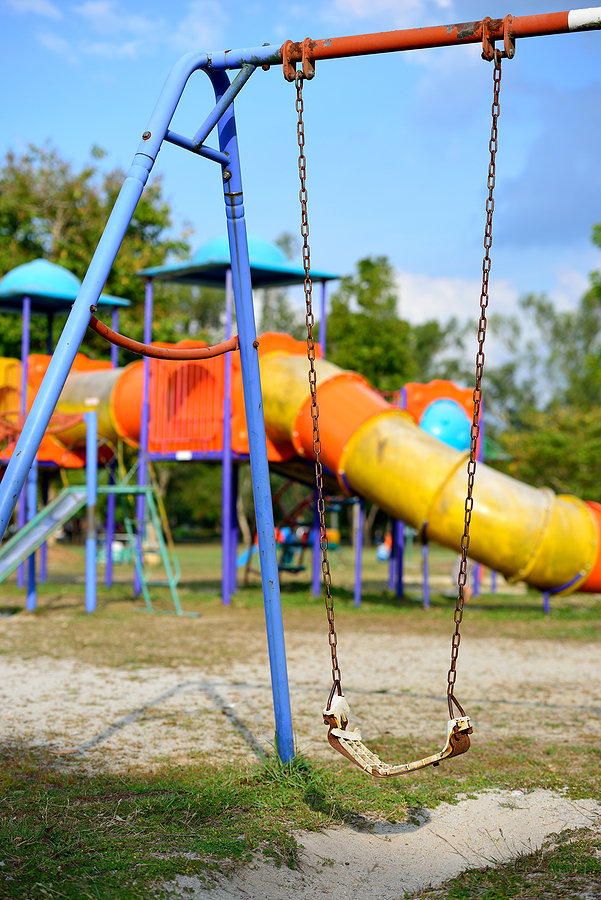
Rusted swing chains, cracked slides, and splintering wooden platforms may seem like cosmetic issues—but they can cause serious injuries. Regular wear and tear is expected, but failure to repair or replace deteriorated equipment is a red flag.
Missing Safety Features or Inadequate Padding
Proper fall surfacing—such as wood chips, rubber mulch, or poured-in-place rubber—is essential beneath climbing structures and swings. When surfacing is compacted, missing, or insufficient in depth, falls that should be minor become serious.
Design Defects
Some equipment is dangerous not because it was poorly maintained, but because it was poorly designed from the start. Protrusions that catch clothing, gaps that trap children’s heads or limbs, and inadequate spacing between components are all design-related hazards that can result in product liability claims against manufacturers.
Inadequate Maintenance and Inspections
Playgrounds require routine inspections and upkeep. A property owner who fails to establish or follow a maintenance schedule may be held liable when that neglect contributes to a child’s injury.
Indiana Premises Liability Laws and What They Mean for Your Case
Premises liability is the area of Indiana law that holds property owners accountable when someone is injured due to unsafe conditions on their property. When a child is hurt on a playground, the owner or operator of that playground may owe compensation under this legal framework.
What Property Owners Are Required to Do
Under Indiana law, property owners have a duty to keep their premises reasonably safe for visitors. For playgrounds specifically, this means:
- Conducting regular inspections of equipment
- Repairing or removing hazardous structures promptly
- Meeting Consumer Product Safety Commission (CPSC) guidelines and ASTM International safety standards for playground equipment
- Providing adequate supervision in supervised settings
When an owner or operator fails to meet these responsibilities, and a child is injured as a result, the legal basis for a premises liability claim may exist.
How Indiana Courts Evaluate Negligence
To succeed in a premises liability case, you generally need to prove four things:
- The property owner or operator owed your child a duty of care
- They breached that duty
- The breach directly caused your child’s injury
- Your child suffered measurable damages as a result
Indiana follows a modified comparative fault rule under Indiana Code § 34-51-2. This means that if the injured party (or the parents, in cases involving children) is found to be 50% or less at fault, compensation may still be recovered—though it will be reduced by their percentage of fault. If fault reaches 51% or more, no recovery is allowed.
Your Legal Rights as a Parent in Indiana
Damages You May Be Entitled to Recover
If negligence caused your child’s injury, you may be able to pursue compensation for:
- Medical expenses: Hospital bills, diagnostic scans, surgeries, medications, rehabilitation, and ongoing care
- Lost wages: Time you missed from work to care for your child
- Out-of-pocket costs: Transportation, assistive devices, and related expenses
- Loss of future earnings: If your child’s injuries result in long-term or permanent disability
- Pain and suffering: Compensation for the physical and emotional trauma your child endured
Time Limits for Filing a Claim
Indiana law gives most personal injury claimants two years from the date of injury to file a lawsuit, under Indiana Code § 34-11-2-4. If the injury involved defective playground equipment (a product liability claim), the same two-year window applies under Indiana Code § 34-20-3-1(b).
Miss this deadline and your right to recover damages is typically lost—permanently.
Public vs. Private Playground: A Critical Distinction
The type of playground where your child was injured significantly affects how your claim is handled.
Claims Against Private Playgrounds
If the playground is owned by a private business, apartment complex, daycare, or similar entity, your claim proceeds as a standard premises liability or product liability case.
Claims Against Government-Owned Playgrounds
Public parks and school playgrounds are often owned by government entities—cities, counties, townships, or public school systems. Suing a government entity in Indiana requires additional steps and stricter deadlines:
- Suing a city, county, or township: You must file a written notice of tort claim within 180 days of the injury (Ind. Code § 34-13-3-8(a))
- Suing the State of Indiana: Notice must be filed with the attorney general within 270 days of the injury (Ind. Code § 34-13-3-6(a))
- Suing a public school: You must provide written notice of the alleged violation and your proposed remedy before filing suit (Ind. Code § 34-13-3.5-4)
Failure to submit proper notice within these windows can bar your lawsuit entirely. Government claims are also subject to damage caps—liability is capped at $700,000 per person and $5 million per accident (Ind. Code § 34-13-3-4(a)).
These deadlines move fast. Acting quickly is essential.
Steps to Take Immediately After a Playground Injury
The actions you take in the days following the incident can make or break your case. Here’s what to prioritize:
- Seek medical attention right away, even if the injury seems minor. Medical records establish the connection between the incident and your child’s injuries.
- Document the scene. Photograph the equipment, any visible defects, and the surrounding area before anything is repaired or altered.
- Photograph/video your child’s injuries and continue documenting their recovery over time.
- Gather witness information. Names and contact details of anyone who saw what happened can be invaluable later.
- Report the incident to the property owner, park manager, or school administration—and request a copy of the incident report.
- Preserve all evidence, including clothing your child was wearing at the time.
- Consult an injury attorney early to ensure deadlines and legal procedures are followed.
Frequently Asked Questions
How long do I have to file a lawsuit in Indiana after my child’s playground injury?
In most cases, you have two years from the date of injury to file a personal injury lawsuit in Indiana. However, if a government entity owns the playground, you may need to file a notice of tort claim within 180 or 270 days depending on the entity. Missing these deadlines can forfeit your right to compensation entirely.
Can I sue a public playground in Indiana?
Yes, but the process is more complex than suing a private party. You must submit a formal written notice to the appropriate government entity within strict time limits before filing a lawsuit. Damage caps also apply to government defendants under Indiana law.
What damages can I recover for my child’s playground injury?
You may be able to recover medical expenses, lost wages (for time you missed from work), out-of-pocket costs, pain and suffering, and—if the injury causes long-term disability—your child’s loss of future earning capacity.
Do I need an attorney for a playground injury case in Indiana?
While you are not legally required to hire an attorney, doing so significantly improves your chances of recovering fair compensation. Insurance companies routinely challenge these claims and attempt to minimize payouts. An experienced personal injury attorney will handle negotiations, meet critical deadlines, and build the strongest possible case on your behalf.
Take Action—Your Family Deserves Answers
A playground injury can leave lasting physical, emotional, and financial effects on your child and your family. Indiana law offers you legal tools to hold negligent parties accountable, but deadlines are firm and the process can be complex.
The team at Craven Blazek Law in Indianapolis, Indiana has represented individuals and families in personal injury cases since 1995. If your child was hurt on faulty playground equipment, contact us today for a free consultation. Don’t wait—the sooner you act, the stronger your case.
Related Posts:
The Important Role of Indiana Premises Liability Lawyers: Protecting Your Rights
School Playground Injuries in Indiana: Legal Options for Parents
Injured by a Defective Product? Your Next Steps Matter