Does Indiana Use the “One Bite” Rule for Dog Bite Accidents?

Many states offer limited liability protection for dog owners in the case that their dog bites or attacks someone for the first time. If there is no history of aggression or violence, or the dog has never bitten or attacked anyone or another animal, then courts give the owner the benefit of not having full liability in the accident. This is often referred to as the “one bite rule” and is applied in cases in which there was never reason to believe a dog was a danger to anyone.

The one bite rule, however, does not eliminate all liability for a pet owner in the case that their dog bit or attacked another person or animal, it simply offers a degree of relief when it comes to legal liability for damages. In contrast to the one bite rule, Indiana uses “strict liability” in dog bite and attack cases. Continue reading to learn more about strict liability and dog bite accidents in Indiana.

Call 317-881-2700 When You Need a Dog Bite Lawyer in Indiana

Strict Liability in Dog Bite Cases

In Indiana, is a person’s dog attacks or bites another without any provocation, the owner of the dog is “strictly liable” for all damages and losses incurred by the victim. The Indiana Code 15-20-1-3 decrees that no matter what a dog’s history is, if it attacks or bites someone, the owner of the dog is entirely responsible for the accident, as well as, liable for the injured person’s damages.

In the case of a dog bite or attack, potential or likely damages include pain and suffering, lost wages from time off work, medical expenses, hospital or emergency room bills, multiple surgeries, rehabilitation, prolonged suffering, permanent disfigurement, permanent scarring, PTSD, mental anguish, and more.

Get Help From a Dog Bite Lawyer Today

If you were recently attacked or bitten by a dog while peaceably on public property or legally on private property (i.e. A friend or neighbor’s house), and did nothing to provoke the dog to hurt you, contact a licensed personal injury lawyer right away. In Indiana, victims of personal injury accidents have two years from the time of the accident to legally file a claim and have a court hear your case. Be sure to act within this time-frame in order to recover the full and fair compensation you deserve.

Craven Blazek Law

Call Craven Blazek Law at 317-881-2700 to file a dog bite injury claim in Indianapolis, Indiana. We offer free initial consultation and never collect lawyer fees unless we prevail for you. Call 317-881-2700 to speak with a friendly and knowledgeable personal injury lawyer in Indianapolis, IN today.

Can an Injured Employee Collect Unemployment and Temporary Total Disability Benefits if Laid Off?

Workers Compensation Lawyer 317-881-2700

Workers Compensation Lawyer 317-881-2700

A few years ago, the Indiana Court of Appeals made a ruling regarding injured employees and workers compensation. They ruled that an injured worker can still receive workers’ compensation benefits even after collecting unemployment during the same time-period, so long as the total amount of unemployment is deducted from the total benefits collected once a settlement is reached. Please continue reading to review an example of such case and learn more about injured victims’ rights.

TTD Benefits Versus Unemployment

A mechanic is injured on the job and takes medical leave while collecting temporary total disability benefits (TTD), or workers’ compensation. The mechanic, although still in pain and disabled, is cleared by a doctor to return to work. When the mechanic does return to work, he finds that he is still in too much pain to perform his vocational duties. And then the shop owner closes the shop and lays off all employees. So what does the mechanic do now? Well he files for and collects unemployment, naturally.

But as he is beginning a new job at a new shop, he realizes that he just can’t do the same nature of work as he used to with all the pain and discomfort he’s experiencing. So for this reason, he has to leave the workforce a second time. At this point, the mechanic sees a doctor for an independent medical exam (IME). During this exam, the physician finds that the mechanic is currently, and has remained, disabled from the time of his initial injury. So now the mechanic, although still collecting unemployment, needs to collect additional TTD benefits as well. Employers are not fans of this. They will fight tooth and nail to avoid paying any additional workers’ compensation to injured employees, especially if they are already collecting unemployment. However, there is a solution for this.

The courts view on such a scenario is that an injured worker CAN be eligible for both unemployment and TTD benefits at the same time, but can only receive one. In this case, the mechanic could be awarded TTD benefits from their employer so long as the total amount of unemployment paid is deducted. Unemployment must be deducted otherwise the employer can contest that the worker was already being paid unemployment and looking for new work. So if a worker is still injured but collecting unemployment, they can argue for TTD later, with the help of a skilled personal injury lawyer.

You see, many Indiana workers are injured on the job, and then laid off while collecting TTD benefits. But once the lay-off happens, many employers are slow to continue paying any TTD benefits, so injured workers resort to filing for unemployment because it’s faster and they need the financial support. But this is not fair, and TTD benefits can be fought for with a fervent legal team on your side.

Craven Blazek Law

Personal Injury Lawyers Indianapolis, Indiana 317-881-2700

Personal Injury Lawyers Indianapolis, Indiana 317-881-2700

Call Craven Blazek Law at 317-881-2700 for help with workers’ compensation claims in Indianapolis, Indiana. Attorney, Daniel Craven, and the team of licensed personal injury attorneys here at our law firm are eager to help injured victims recover the full and fair compensation they deserve. We offer free initial consultations and never collect lawyer fees unless we win your settlement. Call 317-881-2700 and speak with a licensed personal injury lawyer in Indianapolis, IN today.

Types of Secondary Liability

Personal Injury Lawyers 317-881-2700

Personal Injury Lawyers 317-881-2700

Secondary liability is also referred to as indirect infringement. It is best defined as a legal obligation, forcing an individual to assume responsibility for another person’s act or behavior. Examples of secondary liabilities include principle liability, employers’ liability and parental liability. There are several other types as well, such as ecclesiastical corporation liability, enterprise liability, and much more; but these cases are generally infrequent and more complex.

The more common types of secondary liability are contributory liability and vicarious liability. These are the primary cases of secondary liability seen in courts today. No matter which type of secondary liability case in question, the underlying factor for each is indirect infringement. Continue reading to learn more about vicarious and contributory liabilities, and where to find professional legal counsel you can trust.

Vicarious Liability

You will find vicarious liability under respondeat superior doctrine, under common law. It decrees the legal responsibilities of any person in a superior role, such as leaders, executives, managers, supervisors, bosses, directors, whole corporations, companies, and more. It makes clear that they are legally responsible for the actions of their teams or employees. An example of a vicarious liability case would be if a parent or guardian fails to properly supervise their child, allowing the child to access the home’s handgun and accidentally shooting and injuring another person. The parents would be held legally accountable for their child’s actions, as well as, the victim’s damages.

Contributory Liability

Contributory liability holds a third party legally responsible for anothers actions, even though they were not actually committing an infringement directly. If a person has knowledge of, benefits from, enables, contributes, or influences another person’s transgression, they too can be held legally responsible under contributory liability. An example of contributory infringement would be if someone loans another person a gun, and that person uses the gun to commit a crime, the loaner of the gun can be held legally responsible for the infringements involving the gun under contributory liability.

Craven Blazek Law

Personal Injury Attorney Indianapolis

Personal Injury Attorneys 317-881-2700

Call Craven Blazek Law at 317-881-2700 to learn your rights following a personal injury in Indianapolis, Indiana. Daniel Craven, and his partners, are licensed and experience accident attorneys that are eager to help victims and their families recover the full and fair compensation deserved. We offer free initial consultations and never collect lawyer fees unless we prevail for you. Call 317-881-2700 for personal injury claims in Indianapolis, IN today.

Types of Legal Guardianship

Personal Injury Lawyers 317-881-2700

Personal Injury Lawyers 317-881-2700

In the case that an adult cannot make decisions for themselves, whether mentally or medically incapacitated, the state provides laws that allows an appointed individual to make decisions for them. These individuals are referred as guardians or conservators, and the people they are making important decisions for are referred to as wards. A person can be determined “incapacitated” when they lack the capacity to make responsible decisions regarding their life.

There are actually seven basic forms of legal guardianship, all of which we will define and discuss in this blog. Continue reading to learn more about the seven types of legal guardianship, and who to talk to for more information pertaining this topic and more.

Guardians and Conservators

In many states, these two terms are used interchangeably; however, in other states, the terms are used to describe a separate set of agendas. For example, a guardian has the power to make decisions for the ward, while a conservator is in charge of a ward’s property, assets, and finances. These roles are also referred to as “guardian of estate” or “guardian of person.”

Some wards require complete guardianship over all aspects of their lives, while others need less. Some wards are capable of managing themselves, but need help managing finances and property. Other wards require several types of guardianship, and retain it through a set of individuals, each responsible for a certain aspect of the ward’s life. Here are the seven most common types of conservatorship:

Limited Guardianship

In the case that a ward can make some, but not all, decisions for his or her life, they will be appointed a conservator with limited guardianship. This guardian has restricted control of a ward’s life.

Plenary Guardianship

Quite the opposite of limited guardianship, plenary conservatorship gives a person complete control of a ward’s life, property, and finances.

Short-Term Guardianship

If a legal guardian needs a person to stand-in for a short amount of time, they can appoint a “short-term” guardian without legal consent from court or judge. For example, if a guardian has to serve jury duty or be hospitalized, they can appoint a replacement guardian for a temporary amount of time.

Temporary Guardianship

In contrast to short-term conservators, temporary guardianship is used for cases of extreme and immediate emergencies. A person appointed as temporary guardian usually only retains the role for no more than 8 weeks; however this varies from state to state.

Testamentary Guardianship

A legal guardian can name another person in his or her will that will be their successor as legal guardian to a particular ward. This does require court approval.

Successor Guardianship

In the case that a legal conservator resigns, dies, or becomes incapable of fulfilling their role as guardian, a successor guardian is appointed. This person is either named in the original guardian’s will, or is appointed afterwards.

Standby Guardianship

When a new guardian has to be appointed, a standby guardian steps in for immediate backup. Until the legal documents and court approvals are complete, the standby guardian fills-in so there is no gap between conservators.

Craven Blazek Law

Personal Injury Lawyers Indianapolis, Indiana 317-881-2700

Personal Injury Lawyers Indianapolis, Indiana 317-881-2700

Call Craven Blazek Law at 317-881-2700 for personal injury claims in Indianapolis, Indiana. Attorneys, Daniel Craven, Keith Blazek, and Ralph Hoover retain extensive trial and litigation experience in accident law. We offer free initial consultations and never collect lawyer fees unless we win your case. Call 317-881-2700 to learn more about filing a personal injury claim in Indianapolis, IN today.

Understanding Medical Consents

Personal Injury Lawyers 317-881-2700

Personal Injury Lawyers 317-881-2700

Anytime a patient is preparing to undergo a medical procedure, surgery, or treatment, the state will require medical consent. In the case that a hospital or doctor fails to obtain proper medical consent from either the patient or their conservator, a medical malpractice lawsuit might be valid. Most states require written medical consent, however, verbal and informed medical consent are necessary as well.

Whether that be a verbal, “yes, I agree” or a nod of the head, a doctor should obtain all forms of consent before moving forward with treatment or surgery. It is a doctor’s responsibility to provide sufficient information regarding a possible medical procedure or treatment. If a patient is not adequately informed or given incorrect information about a proposed procedure, and injury occurs during treatment, they could have a medical malpractice case.

Defining Consent

Basically, consent is when a doctor explains a medical procedure or treatment, and a patient agrees to have it done. As mentioned, patient consent can be verbal, or an act of consent, like nodding the head; but many states have medical consent laws that require written compliance on record. On the other hand, a written consent is not sufficient enough for most doctors, and an informed consent is sought after as well by medical authorities.

Informed consent is when the doctor or medical authorities fully explain and define the medical treatment or procedure in question. This includes the name and credentials of the doctor performing or supervising the treatment, as well as, the patient’s medical condition, the intent or purpose of the treatment, the potential risks and side effects of the treatment, potential alternatives for treatment, the likelihood of the treatment being successful, the expected recovery time, the associated costs of treatment, and how much of the cost is covered by insurance.

At this time, it is the patient’s right and responsibility to ask all the pertinent questions and concerns they have regarding the medical treatment or procedure. Patients also reserve the right to think things over and discuss their concerns with friends and family.

Once a patient has consented to a certain medical surgery or treatment plan, the doctor cannot go outside that consent unless it is a matter of health during an operation or procedure. In the case that a doctor goes beyond what was originally consented, or performs an additional treatment that was not agreed to, a patient can sue under their state’s medical malpractice statutes.

Medical Malpractice Lawyers

Personal Injury Lawyers 317-881-2700

Personal Injury Lawyers 317-881-2700

Call The legal office of Craven Blazek Law at 317-881-2700 to file a medical malpractice claim in Indianapolis, Indiana. Attorney, Daniel Craven, and the team of licensed personal injury lawyers, are eager to answer your questions about a potential personal injury or medical malpractice accident. We offer free initial consultations to discuss your case and we never collect lawyer fees unless we win your settlement.

Is a Negligent Tattoo Parlor Liable in a Personal Injury Case?

Personal Injury Lawyers 317-881-2700

Personal Injury Lawyers 317-881-2700

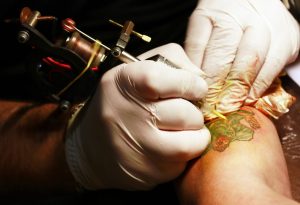
Getting a tattoo is a big decision; a decision that people usually put a lot of feeling and thought into before choosing one that feels right. For this reason, it is devastating to end up with a bad ink job, or worse, one that causes a person health complications and more. Many tattoo enthusiasts ask about tattoo shop’s liability in the case that a tattoo job goes wrong. Is a shop or artist legally accountable for a bad tattoo or injuries that result from it? The answer mainly depends on the question of negligence.

Was the tattoo parlor negligent in any way, and did that negligence cause a client personal injury or harm? This is the agenda that the law uses to identify whether or not a tattoo parlor is liable for a client’s damages.

Potential Risks and Complications

There are several risks that can arise from getting a tattoo, as there are with any type of process or procedure that involves bleeding or blood. If anything unsterilized gets into the blood stream, it can cause infections, disease, and more. If a needle is contaminated or unsterilized, it can be the means of infecting a person’s blood stream in this way. On top of disease and infection, other risks are possible as well.

Tattoo Parlor Liability

Personal Injury Lawyers 317-881-2700

Personal Injury Lawyers 317-881-2700

Before a person gets their tattoo, they are asked to sign a consent form notifying them of all the possible risks that could take place. Because of this form, tattoo parlors are not entirely responsible for infections and other health complications that arise following an ink job. But this doesn’t mean they can’t be held liable at all. If something goes wrong after giving a tattoo to a client, the parlor can be legally liable under certain circumstances. If the artist or shop was negligent in anyway, and this negligence led to a client’s injury, then there would be a valid claim against them.

Here are some examples of possible tattoo parlor negligence:

• Failing to Inquire about a Client’s Allergies or Medical History
• Not Using Sterile Needles
• Improper Care and Upkeep of Equipment and Tools
• Failing to Use Proper Protective Equipment
• Working Under the Influence of Drugs and Alcohol
• Failing to Give Proper After-Care Instructions
• And More

It is important to discuss tattoo parlor legal claims with a licensed personal injury attorney. Tattoo parlors that have been guilty of personal injuries to clients often combat accusations of negligence by blaming the client in any way. They will argue that the client was in some way negligent and did not follow after-care instructions properly. Although this is often true, there are cases where a client is innocent and the parlor is the negligent party. To make this distinction accurately, it is highly recommended to outsource professional legal counsel. Most personal injury lawyers will even listen to your case, free of charge, and determine whether or not you have a valid claim.

Craven Blazek Law

Personal Injury Lawyers 317-881-2700

Personal Injury Lawyers 317-881-2700

Call Craven Blazek Law at 317-881-2700 for information about tattoo shop lawsuits in Indianapolis, Indiana. Personal injury attorneys, Daniel Craven, Ralph Hoover, and Keith Blazek retain extensive knowledge and experience in accident law, litigation, and trial. We offer free initial consultations and never collect lawyer fees unless we win your settlement. Call 317-881-2700 to make an appointment with an Indianapolis personal injury lawyer, today.

Medical Malpractice and Surgical Error Lawsuits

Medical Malpractice Lawyers 317-881-2700

Medical Malpractice Lawyers 317-881-2700

Surgery is meant to improve or enhance a patient’s quality of health, life, and well-being. But what happens when a surgery isn’t necessary, and worse, causes injury or suffering to a person? This could possibly be an example of a medical malpractice case depending on the circumstances. It is rare and difficult to prove a medical malpractice case because not all surgeries are guaranteed, protecting doctors and hospitals from becoming targets of malpractice lawsuits.

On the other end of the spectrum, medical malpractice is a real thing and can happen to anyone. A common question about malpractice claims regards the extent of which a surgery was actually needed or necessary. Many patients of “unnecessary surgeries” are wondering if they have a valid claim against their doctors, surgeons, and medical organizations; especially if their surgery caused them extensive pain, suffering, and other damages, or went wrong in some way or another. Continue reading to learn a few brief facts about medical malpractice law and more.

Medical Malpractice Surgery

More than 40 million surgeries are performed each year. With numbers like these, there has to be a fraction of surgeries that have caused patients’ injuries or death. And although millions of operations are undergone year after year, not all of them are actually necessary. In fact, nearly half of all surgeries are not “necessary.” Many are cosmetic, voluntary, requested, and more. And many others are fully disclosed as tentative or trial operations to see if they can improve or enhance a person’s life and health. This is especially true for people with cancer, chronic health conditions, and orthopedic restrictions and complications.

Indianapolis Accident Lawyers 317-881-2700

Indianapolis Accident Lawyers 317-881-2700

Since surgery comes with certain risks, patients take on a certain degree of personal responsibility in opting or agreeing to it. This protects doctors and hospitals from medical malpractice lawsuits so long as they did their part one hundred percent accurate and correct. If a surgery causes complications like blood clotting, damage to organs, hemorrhaging, or other exemplary risks, a lawsuit will not hold up in court. This is because the surgery causes these damages, not the negligence of the doctor, surgeon, or hospital. On the other hand, if a doctor or surgeon uses the wrong instrument, or makes a surgical error, (like removing the right kidney instead of the left), then a patient will most likely have a valid and strong medical malpractice claim.

Malpractice law is very tedious and complicated, which is why it is strongly encouraged to seek professional legal counsel from a licensed and experienced personal injury lawyer. They retain the knowledge and facts to answer all your questions and make you feel comfortable moving forward with a claim. Trust an accident attorney for all aspects of your medical malpractice case.

Craven Blazek Law

Personal Injury Lawyers 317-881-2700

Personal Injury Lawyers 317-881-2700

Call Craven Blazek Law at 317-881-2700 for information about medical malpractice in Indianapolis, Indiana. Attorneys, Daniel Craven, Ralph Hoover, and Keith Blazek can answer all your questions about malpractice lawsuits, surgical errors, personal injury claims, and more. We offer free initial consultations never charge attorney fees unless we prevail for you. Call 317-881-2700 and speak with an Indianapolis personal injury lawyer, today.

Did You Have a Car Accident in a Company Vehicle?

Car Accident Lawyers 317-881-2700

Car Accident Lawyers 317-881-2700

Many people have to drive from place to place in a company vehicle. Whether salespersons, repairmen, delivery drivers, or taxi service, a company vehicle is used quite often. When accidents happen in a company car, truck, or van, questions generally arise regarding liability. It can be confusing predicting the circumstances of a motor vehicle accident in company property. Would it fall under workers’ compensation? Or would the employee be responsible for their own damages, as well as the vehicular damages? These are all appropriate questions that we will discuss in this blog.

Continue reading to learn about car accidents that happen in company-owned vehicles and what to do if it happens to you on or off the clock.

Steps for Company Vehicular Accidents

Always be prepared for an accident. This means keeping pen, paper, insurance information, vehicle registration, and even a digital or disposable camera in the vehicle at all times. This way, if an accident occurs, you are fully-equipped to document all the needed information and evidence at the scene.

In the case that an accident does take place, the first thing to do is check yourself and the other vehicle occupants for injuries. If you or anyone else are hurt, call 911 immediately; and then call the police. Even if you are just a little sore, contact EMT services or go to the hospital and have yourself checked out. Head, neck, and back injuries from car accidents can lay dormant for several days before showing signs and symptoms. In the case that this happens, you want to have a medical report on file for evidence of injuries and legal purposes.

Car Accident Lawyers 317-881-2700

Car Accident Lawyers 317-881-2700

After emergency services are called and if you are not too injured, use the tools you have on-hand to self-document the scene of the crime. Take pictures of all pertinent damages and obstructions. Write down license plate numbers, names, insurance information, your observations of the driver, what the driver says, and more. When talking to the other drivers involved, do not talk too much or say anything that implies remorse, guilt, or fault. Do not admit to anything and don’t say too much because it can be used against you in legal proceedings and questioning later on. Simply exchange necessary information and leave.

Employer Responsibilities

After leaving the scene of the accident, contact your employer to notify them of the incident. Provide all pertinent paperwork, documents, information, and evidence regarding the circumstances of the wreck. Most likely, they have a legal department and company procedures for company vehicular accidents and workers’ compensation. If the company car is still operational, they will ask you to return it so they can either repair it or salvage it. Otherwise, your company will contact a wrecker service to haul the vehicle away to their desired location.

If you are injured as a result of a car accident that happens in a company vehicle on the clock, you can collect workers’ compensation, as well as, pursue a third party lawsuit against the negligent driver that cause your injuries. Contact a personal injury car accident lawyer for details about filing this type of lawsuit. You may be entitled to additional compensation for your damages.

Craven Blazek Law

Personal Injury Lawyers 317-881-2700

Personal Injury Lawyers 317-881-2700

Call Craven Blazek Law at 317-881-2700 to file a third party lawsuit against a negligent driver in Indianapolis, Indiana. Attorney Daniel Craven is a seasoned car accident injury lawyer with decades of litigation and trial experience. Our law firm offers free initial consultations and never collects lawyer fees unless we win your settlement. Call 317-881-2700 for details about our personal injury law firm in Indianapolis, IN today.

Bicyclists and Drivers: Who’s At Fault in the Case of an Accident?

Bicycle Accident Claims 317-881-2700

Bicycle Accident Claims 317-881-2700

Many bike lanes have been added to several busy streets and roadways throughout the state. While many drivers are not happy about it, avid cyclists are very pleased. It’s been a common debate/initiative between riders and the city to improve bike routes on major roads to support safer commutes. But did giving cyclists their bike lanes improve their security while riding on the road? Or did it just cause drivers more anxiety trying to safely navigate around them, especially during rush-hour times?

Regardless of the answers to these questions, there is a bigger question on our minds. That question asks about liability in the case that a driver hits a cyclist who is in a designated bike lane, and why. Continue reading to explore this topic, and learn what circumstances might hold both parties accountable for these kinds of accidents and injuries.

Bike Lane Accidents and Injuries

It is important to point out bikers’ rights on the road to get a foundation of understanding when comprehending liability in the case of an accident involving motor vehicles. First, all cyclists have legal rights on the road, so long as they are obeying all traffic signals and road rules. If there are designated bike lanes in which a biker is using responsibly, and a negligent driver hits them, the biker would have legal rights to pursue a lawsuit against the driver for their damages.

Bicycle Accident Claims 317-881-2700

Bicycle Accident Claims 317-881-2700

In other cases, if a biker was the one who acted negligently by making themselves vulnerable to danger, or failing to obey traffic laws, they could be at-fault for any injuries sustained in a biker/car accident. For example, if a person on a bicycle is under the influence of drugs or alcohol, and they swerve into the traffic lane outside of the bike lane, causing them to get hit, it would not be the driver’s fault because the driver was obeying the rules of the road and respected the boundaries of the bike lane. Because the biker was intoxicated, it would be found that they were negligent.

On the other hand, if a driver was behaving negligently behind the wheel, whether speeding, texting, eating, or under the influence, and a biker was responsibly navigating their own bike lane, the driver would be held accountable for any injuries sustained to the biker in the case of an accident.

There are several stipulations and exceptions to the rules of a personal injury claim. This is why it important to hire professional legal counsel for accurate information and assessments. They retain the proper resources and experience to litigate your case and recover full and fair compensation for your damages, whether in a settlement or
court case.

Craven Blazek Law

Personal Injury Lawyers 317-881-2700

Personal Injury Lawyers 317-881-2700

Call 317-881-2700 and speak with a bicycle accident lawyer in Indianapolis about filing a personal injury claim against a negligent driver. Attorney Daniel Craven, has decades of litigation and trial experience, and will work fervently to recover the compensation you rightfully deserve. We offer free initial consultations to discuss your case, and we never charge lawyer fees unless we recover for you in a settlement. Call 317-881-2700 for information about bicycle accident lawsuits in Indianapolis, IN today.

Choose Craven Blazek Law for Indianapolis Personal Injury Representation You Can Trust!

Personal Injury Law Firm Indiana

Personal Injury Law Firm 317-881-2700

Craven Blazek Law is a highly respected and seasoned personal injury law firm located in downtown Indianapolis, Indiana. We retain a team of skilled accident attorneys with extensive litigation and trial experience. When it comes to recovering full and fair compensation for damages following a serious injury, we are the law firm to choose. We offer free initial consultations so that clients are not subjected to out-of-pocket expenses on our first visit to assess our claim.

And Craven Blazek Law never collects any upfront lawyer fees, and only collects fees if we win your settlement. Call us at 317-881-2700 and speak with a friendly and knowledgeable company representative to learn more about our Indianapolis personal injury law firm, today.

We are the Personal Injury Lawyers that Will Recover the Full and Fair Compensation You Deserve Following a Serious Accident in Indianapolis, Indiana!

Personal Injury Lawyers 317-881-2700

Personal Injury Lawyers 317-881-2700

When you call Craven Blazek Law, you can expect a prompt and friendly greeting from a knowledgeable and caring company representative or administrator. You will then have an opportunity to ask any questions you like, set up a free initial consultation, or request to speak with a licensed accident attorney. Compassion is apparent when you come to Craven Blazek Law with your legal afflictions. We care about our clients and our clients’ families. Call us directly at 317-881-2700 to speak with a licensed personal injury lawyer in Indianapolis, IN today.